SYBAU Meaning on TikTok : Why It’s Going Viral
If you’ve scrolled through TikTok comments lately, chances are you’ve run into the word “SYBAU” and wondered what on earth it means. One minute it looks like a random keyboard smash, and the next it’s sitting at the top of a comment section with hundreds of likes. This acronym has quietly taken over TikTok, Twitter/X, Snapchat, and group chats everywhere, and it isn’t as friendly as it sounds.
This guide breaks down exactly what SYBAU stands for, how people are using it online, when it crosses the line into rude territory, and why it suddenly became one of 2026’s biggest slang terms. By the end, you’ll know exactly how to read it, when to use it, and when to leave it alone.
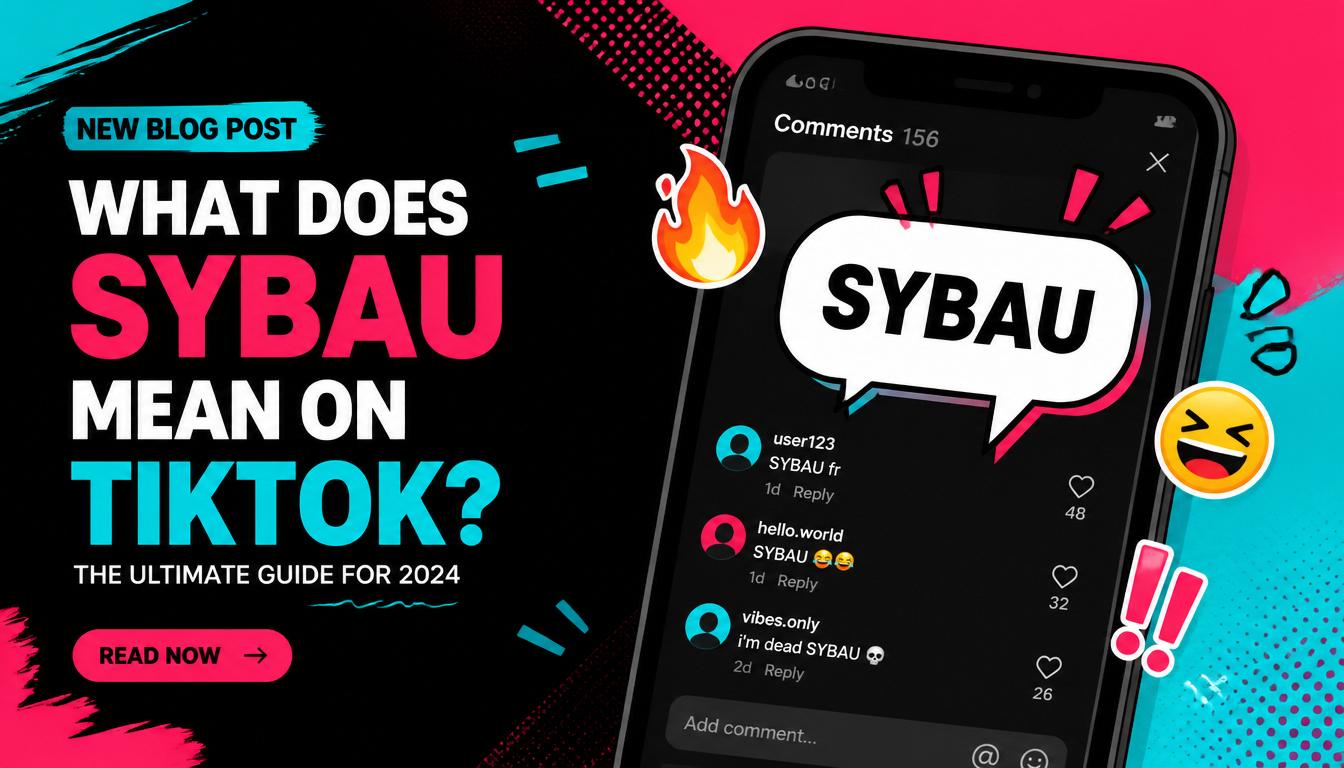
What Does SYBAU Mean on TikTok?
SYBAU is short for “Shut Your B** Ass Up.” It’s a blunt, aggressive way of telling someone to stop talking, usually aimed at a person who’s being annoying, dramatic, or overstepping in a conversation.
The phrase isn’t actually new. Records show variations of it circulating online as far back as 2003 on sites like Urban Dictionary. What changed is that TikTok picked it back up in late 2024 and turned it into a full-blown trend, spreading it into comment sections, duets, and reaction videos almost overnight.
A few quick facts about the term:
- It functions as a harsher, more dismissive version of “shut up.”
- It’s typically used to shut down someone seen as annoying, fake, or attention-seeking.
- The tone can shift from genuinely hostile to playfully sarcastic, depending on who’s saying it and to whom.
- It’s part of a wider wave of coded slang that helps users express strong reactions while dodging platform content filters.
In short, SYBAU is less a “definition” you memorize and more a vibe you have to read from context which is exactly why it confuses so many people the first time they see it.
Where Is SYBAU Commonly Used?
SYBAU shows up most often in fast-paced, reactive spaces where people are commenting on drama, hot takes, or content they find cringeworthy. You’ll typically spot it in:
- TikTok comment sections especially under videos involving relationship drama, “situationship” content, or someone oversharing.
- Twitter/X replies often attached to spoilers, reality TV discourse, or unsolicited opinions.
- Group chats and DMs used between friends as a quick, sharp way to tease someone or end a back-and-forth.
- Gaming chats thrown around during matches when someone is trash-talking or being a sore loser.
- Meme pages frequently stacked with other slang like “TS,” “PMO,” and “ICL” to create exaggerated, brainrot-style captions.
See More : What Does MYF Mean in Text? Your Complete Guide (2026)
Tone Check
Because SYBAU can read as either a joke or a genuine insult, tone is everything. The same three words can land completely differently depending on the relationship between the people using them.
| Context | Likely Tone | Risk Level |
|---|---|---|
| Close friends joking around | Playful, roasting | Low |
| Comment on a stranger’s post | Dismissive, rude | Medium-High |
| Reply to a serious or emotional post | Harsh, hurtful | High |
| Sarcastic reaction to obvious drama | Comedic, exaggerated | Low-Medium |
| Workplace or formal chat | Inappropriate | Very High |
Examples of SYBAU Meaning on TikTok in Conversation
Seeing the term in context makes it much easier to understand. Here’s how it typically plays out:
- Reacting to obvious content: Someone posts a video stating something painfully obvious, and the top comment reads, “SYBAU, we already knew that.”
- Shutting down spoilers: During a reality show premiere, a fan tweets, “Stop spoiling the episode, SYBAU!!”
- Friendly roast: In a group chat, one friend teases another for being late again, and the reply comes back: “bro SYBAU, you’re always late.”
- Dismissing a bad take: Under a controversial opinion post, someone comments, “SYBAU, this is the worst take I’ve seen all week.”
- Trend participation: Some TikTokers use it purely for comedic effect, spamming it in comments just to join in on the trend rather than to insult anyone specific.
Notice how none of these examples are polite but some are clearly joking, while others are genuinely dismissive. That gap is what makes this slang tricky.
When to Use and When Not to Use SYBAU
When It’s (Sometimes) Used
- Between close friends who already joke around in a similarly blunt way
- As a sarcastic, over-the-top reaction to obviously dramatic or cringe content
- Inside meme culture or trend participation, where it’s more about the joke than the message
- In casual online spaces where the tone of the whole conversation is already lighthearted
When NOT to Use It
- With strangers or acquaintances who don’t know your sense of humor
- In response to someone sharing something emotional, personal, or vulnerable
- In professional settings emails, Slack, Microsoft Teams, or school assignments
- On dating apps, where it almost always comes across as disrespectful
- Directed at someone from a different cultural background who may not read the tone the way you intend
Other Meanings of SYBAU
While “Shut Your B** Ass Up” is by far the dominant meaning, a few other interpretations occasionally pop up, mostly because the acronym looks unfamiliar at first glance:
- Random typing or keyboard smash some users genuinely mistake it for nonsense before learning the real meaning.
- Misheard as a name or brand several people online have admitted they assumed it was a foreign word, a DJ’s name, or even a car brand before searching it up.
- Regional or niche usage in a handful of TikTok videos, creators have played with the letters for unrelated jokes, though this is rare and doesn’t reflect the term’s actual, widely recognized meaning.
None of these alternate readings are common enough to compete with the primary meaning, but they explain why so many people search for a definition instead of guessing.
Similar Slang Words or Alternatives
SYBAU rarely travels alone. It’s often paired with, or used interchangeably alongside, other pieces of internet shorthand:
| Slang | Meaning |
|---|---|
| TS | “That’s/This sh**” — used to react to a situation |
| PMO | “Pisses me off” |
| ICL | “I can’t lie” |
| STFU | “Shut the f* up” — a more direct, less coded relative of SYBAU |
| Ratio | Used when a reply gets more engagement than the original post, implying the original was weak |
These terms frequently stack together in captions or comments (like “TS PMO ICL”) to create exaggerated, meme-heavy sentences that read as intentionally chaotic.
Is SYBAU Offensive?
Yes, at its core, SYBAU is offensive. It’s a compressed version of a genuine insult, and the underlying words are considered vulgar in most contexts. That said, offensiveness in slang is rarely black and white:
- Among close friends who already talk to each other bluntly, it can register as harmless roasting.
- Directed at someone who doesn’t share that dynamic, it’s a straightforward insult.
- It also carries roots tied to Black internet culture and vernacular, so using it casually without understanding that context can come across as careless or appropriative.
The safest approach is to treat SYBAU the same way you’d treat any strong slang: fine in the right crowd, risky everywhere else.
Why Is SYBAU Trending on TikTok?
A few forces have combined to push SYBAU into mainstream Gen Z vocabulary:
- Content moderation workarounds: Abbreviating explicit phrases lets creators express strong reactions without tripping TikTok’s filters, similar to how “unalive” replaced more sensitive words.
- Comment section culture: TikTok’s comment sections thrive on quick, punchy reactions, and SYBAU delivers a maximum-impact insult in a minimal number of characters.
- Meme stacking: Once it got paired with other viral acronyms like TS and PMO, it became part of a recognizable “brainrot” meme format that spread fast purely through repetition and inside-joke appeal.
- Cross-platform spillover: As it gained traction on TikTok, it jumped to X/Twitter, Snapchat, and group chats, reinforcing its popularity across multiple feeds at once.
- Curiosity loop: Because the acronym isn’t self-explanatory, confused users search for its meaning, watch explainer videos, and then use it themselves a cycle that keeps the term circulating.
FAQs
Is SYBAU always rude?
Not always, but it’s rooted in a genuine insult, so it usually carries at least a hint of rudeness depending on tone and relationship.
Can SYBAU be used jokingly?
Yes, close friends often use it as playful banter or sarcastic roasting rather than a real insult.
Is SYBAU banned on TikTok?
No, the acronym itself isn’t banned, though TikTok’s moderation systems may flag posts depending on surrounding context.
Should I use SYBAU in comments?
Only in casual, friendly spaces avoid it with strangers, in professional settings, or on emotional posts. Is SYBAU common outside TikTok?
Yes, it has spread widely to X/Twitter, Snapchat, gaming chats, and group texts beyond just TikTok.
Final Thoughts
SYBAU is a perfect example of how fast internet slang can travel once it finds the right platform. What started as an obscure acronym from early 2000s forums turned into one of TikTok’s most-used comment section phrases within a matter of months. At its core, it’s a sharp, blunt way of saying “stop talking,” but its real meaning shifts depending on who says it, who hears it, and the tone behind it.
If you’re going to use SYBAU yourself, save it for friends who already share your sense of humor, and steer clear of it in professional, unfamiliar, or emotionally sensitive conversations. Understanding slang like this isn’t just about keeping up with trends it’s about knowing how to read a room, even a digital one.