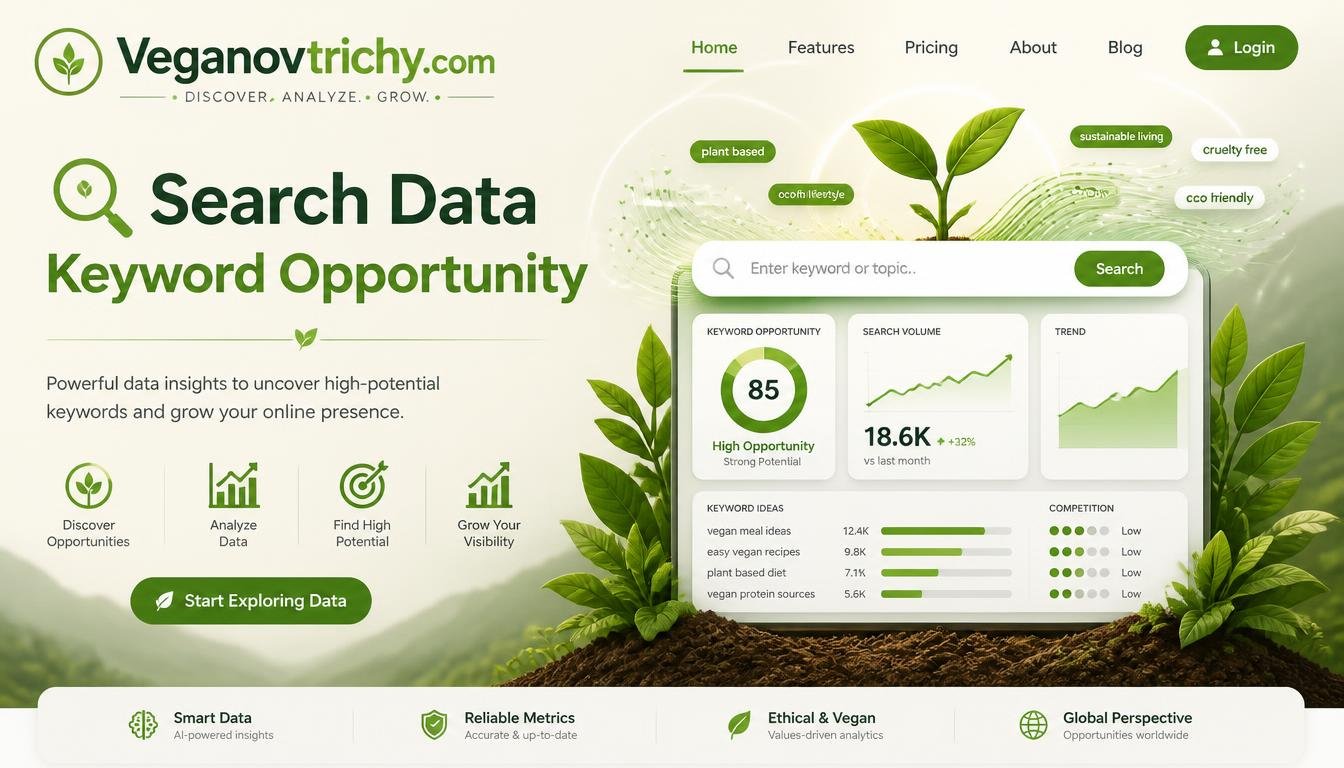
Veganovtrichy.com Search Data and Keyword Opportunity
Understanding the nuances of Veganovtrichy.com search data and keyword opportunity requires a deep look at how specific niche audiences interact with digital content. By analyzing current traffic patterns and identifying untapped search volume, site owners can better align their strategy with user intent. This article explores the mechanics of evaluating such data, helping you learn how to refine your approach to online growth.
Whether you are managing a growing brand or simply curious about how search trends influence visibility, grasping these metrics is essential for long-term success. We will examine the core components that drive interest and explain how to leverage them for better results.
Core Metrics in Search Data Analysis
When you look at the search data for a domain like Veganovtrichy.com, the primary goal is to distinguish between high-intent traffic and casual browsing. High-intent visitors are those actively searching for solutions, products, or specific information that your site provides.
To measure this, you must look beyond total page views and focus on session duration and bounce rates. These metrics tell you if the content provided actually satisfies the user’s query or if they leave unsatisfied.
Another vital metric is the click-through rate (CTR) from organic search results. A high ranking is meaningless if users do not find your title or meta description compelling enough to click.
You should compare your site’s performance against industry benchmarks to understand where you stand. If your CTR is significantly lower than average, it is a clear signal that your metadata needs optimization.
Finally, consider the geographic distribution of your search traffic. Understanding where your audience is located allows you to tailor your content to specific regional needs.
If a large portion of your traffic originates from a specific country, you might create localized content to deepen that engagement. This level of granular analysis is what separates high-performing sites from those that struggle to maintain consistent growth.
Identifying Hidden Keyword Opportunities
The process of discovering a new keyword opportunity often involves looking for questions that competitors have missed. Instead of targeting broad terms with millions of monthly searches, focus on long-tail phrases that are easier to rank for.
These phrases often indicate a user who is further along in their decision-making process. For instance, someone searching for “how to start a vegan lifestyle on a budget” is much more likely to engage with a detailed guide than someone simply searching for “vegan.”
You can use various tools to monitor search volume trends over time. Look for seasonal spikes or dips that might correlate with specific events or holidays.
By mapping these trends, you can plan your content calendar to ensure you are publishing relevant material exactly when demand is peaking. This proactive strategy ensures that your site remains a top resource for your audience throughout the year.
Furthermore, pay attention to the “People Also Ask” boxes in search results. These snippets provide a direct window into the questions your target audience is currently asking.
By creating content that directly answers these questions, you increase your chances of being featured in those prominent positions. This approach turns a simple keyword opportunity into a sustainable source of high-quality, targeted traffic.
Comparing Traffic Sources and Performance
Understanding where your visitors come from is just as important as knowing what they search for. A diversified traffic profile is the hallmark of a healthy website.
Relying solely on one search engine or a single social media platform creates a single point of failure that can jeopardize your long-term viability. The table below outlines how different traffic sources typically contribute to a site’s overall reach.
| Source Type | Typical Conversion Rate | Traffic Quality |
|---|---|---|
| Organic Search | High | Intent-driven |
| Social Media | Moderate | Engagement-focused |
| Direct Traffic | Very High | Brand-loyal |
| Referral Links | Low to Moderate | Discovery-based |
As the data suggests, organic search often provides the highest quality traffic because it is inherently reactive to user needs. While social media can drive massive spikes in interest, that traffic is often fleeting.
Direct traffic, on the other hand, represents your most dedicated users who return to your site repeatedly. By balancing these sources, you build a resilient foundation that can withstand changes in algorithms or platform popularity.
Strategies for Content Optimization
Once you have identified your primary keyword opportunities, the next step is to create content that provides genuine value. Avoid the temptation to stuff your articles with keywords, as this practice can lead to penalties from search engines.
Instead, focus on natural language and provide clear, actionable advice that addresses the user’s specific problem. Using semantic variations of your target terms helps search engines understand the broader context of your pages.
Structure is another critical factor in optimization. Use clear headings to break up long blocks of text, making it easier for users to scan and digest the information.
Include a mix of short, punchy paragraphs and longer, more detailed explanations to keep the reader engaged. Incorporating multimedia elements, such as infographics or relevant videos, can also significantly improve the time users spend on your site.
Consistency is key when it comes to publishing. A site that updates regularly signals to search engines that it is active and relevant.
However, quality should never be sacrificed for quantity. It is far better to publish one well-researched, deeply informative article per week than to flood your site with low-quality content that fails to address your audience’s needs.
Leveraging Social Signals for SEO
While social media is not a direct ranking factor in most search algorithms, it plays a vital role in amplifying your visibility. When your content is shared across platforms, it reaches a wider audience, increasing the likelihood of earning natural backlinks from other websites.
These backlinks are a strong signal of authority and trust to search engines. To maximize this impact, ensure your content is easily shareable by including clear buttons and compelling imagery.
Engaging with your audience on social channels also provides valuable feedback. You can learn exactly what your readers like, what they find confusing, and what topics they want to see more of in the future.
This feedback loop informs your future keyword research and content strategy. By listening to your community, you ensure that your site continues to evolve in a direction that serves its users.
Additionally, consider collaborating with influencers or experts in your niche. A mention from a reputable source can drive significant traffic and improve your site’s perceived authority. Always aim for genuine connections rather than transactional exchanges.
Building a community around your brand creates a level of loyalty that is difficult for competitors to replicate. For those interested in the technical side of how search engines evaluate authority, you can read more about how search works through official documentation.
Read More: Barapk Org Review: What It Is and APK Safety Guide
Common Mistakes in Keyword Targeting
Many site owners make the mistake of chasing high-volume keywords that are far too competitive for their current standing. Trying to rank for a term like “healthy food” when you are just starting out is an uphill battle you are unlikely to win.
Instead, focus on long-tail variations that have lower competition. These smaller, more specific targets are often where the real growth happens for new or mid-sized sites.
Another frequent error is ignoring user intent. Just because a keyword has high volume does not mean it is the right fit for your content.
If the results for a specific search term are dominated by e-commerce stores, writing an informational blog post for that term will likely fail. Always check the search results page before committing to a keyword to ensure your content matches what users are actually looking for.
Finally, failing to update old content is a missed opportunity. Even a high-performing article will eventually lose its relevance if the data or advice becomes outdated.
Regularly auditing your site to refresh old posts can lead to a significant boost in traffic. It is often much easier to improve an existing page’s ranking than it is to build a new one from scratch.
Essential Tools for Tracking Progress
To effectively monitor your progress, you need a reliable set of tools that provide actionable data. Most professionals rely on a combination of free and paid services to get a complete picture of their site’s health.
Key features to look for in these tools include rank tracking, backlink analysis, and competitor monitoring. Having this information at your fingertips allows you to make data-driven decisions rather than relying on guesswork.
* Google Search Console for monitoring organic performance.
* Google Analytics for tracking user behavior and session paths.
* Keyword research platforms to identify new opportunities.
* Backlink checkers to monitor your domain authority.
* Social media management tools to schedule and track shares.
These tools are not just for the pros. Many of them offer intuitive interfaces that are accessible to beginners.
By setting up regular reports, you can spot trends early and adjust your strategy before they become major issues. Remember, the goal is not to drown in data, but to use it to inform simple, effective changes that move the needle.
FAQs
How often should I review my keyword strategy?
You should conduct a thorough review of your keywords at least once every quarter. This allows you to account for seasonal trends and shifts in search behavior without getting overwhelmed by constant daily adjustments.
What is the most important factor in ranking high?
While there are hundreds of factors, high-quality, relevant content that provides a positive user experience remains the most critical. If users find exactly what they need on your page, search engines will naturally favor your content.
Can I target the same keyword on multiple pages?
It is generally better to avoid this, as it can lead to keyword cannibalization where your own pages compete against each other for the same search position. Focus each page on a unique, specific topic to avoid this issue.
How long does it take to see results from SEO?
SEO is a long-term strategy, and it typically takes anywhere from three to six months to see significant movement in rankings. Patience is essential, but consistent effort will lead to sustainable growth over time.
Why is my traffic dropping despite constant posting?
A drop in traffic can be caused by many factors, including algorithm updates, increased competition, or outdated content. Check your analytics to see if the drop is across the whole site or limited to specific pages, which will help you pinpoint the cause.
Conclusion
Navigating the complexities of Veganovtrichy.com search data and keyword opportunity is a rewarding process that pays dividends in sustained traffic and audience loyalty. By focusing on specific, high-intent keywords and consistently delivering value, you create a digital presence that stands out. Remember that SEO is not a one-time task but a continuous cycle of research, implementation, and refinement.
Use the insights provided here to evaluate your current strategy and make small, intentional changes to your content. If you stay curious and keep learning, you will find that the opportunities for growth are vast. Keep tracking your metrics, keep listening to your audience, and watch your site thrive in the competitive landscape of modern search.