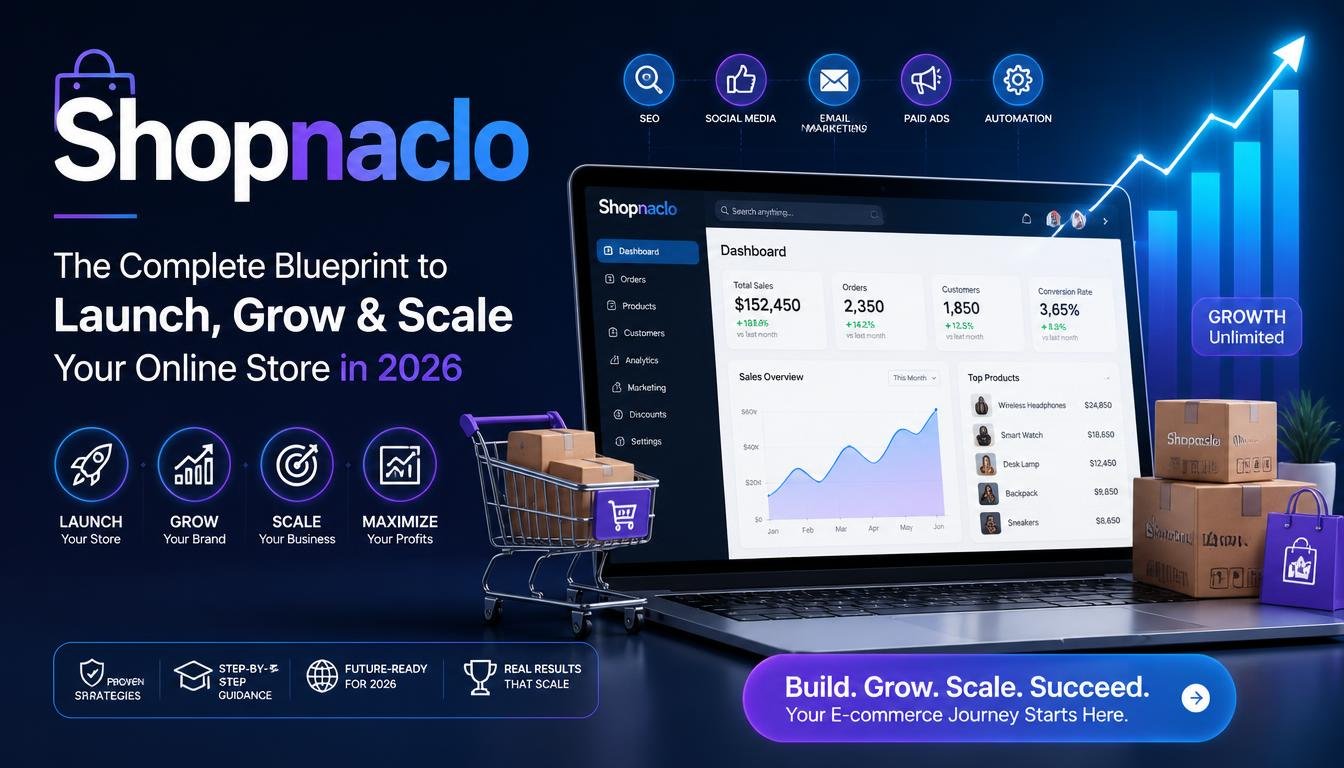
Company Website Shopnaclo: The Complete Blueprint to Launch, Grow, & Scale Your Online Store in 2026
Building a digital storefront requires more than just a domain name and a template. Whether you are an entrepreneur testing a niche idea or an established brand moving online, Company Website Shopnaclo: The Complete Blueprint to Launch, Grow, & Scale Your Online Store in 2026 offers the structured path you need to succeed. By focusing on user experience, inventory management, and targeted marketing, you can transform a simple website into a revenue-generating machine.
This article covers the essential technical and strategic milestones required to turn your vision into a functional reality. You will gain actionable insights into platform selection, logistics, and customer retention strategies that define successful modern businesses.
The Core Requirements for Your 2026 Ecommerce Launch
The primary cost to launch an online store in 2026 ranges from $500 to $5,000 for a professional setup, depending on whether you outsource development or use a site builder. You do not need a massive budget to start, but you do need a clear plan for your initial overhead. Essential expenses include domain registration, hosting or platform subscription fees, and initial inventory procurement.
You must also consider the legal requirements for your jurisdiction. Most regions require a business license and a registered tax ID to operate a commercial website. Failing to secure these documents early can result in payment processing delays or account closures from major gateways like Stripe or PayPal.
Focus on selecting a platform that scales with your ambition. If you are just starting, a hosted platform reduces the technical burden of server maintenance and security patches. As your business grows, look for options that allow for custom API integrations and advanced inventory tracking.
Designing a High-Conversion User Experience
A successful online store prioritizes the speed of the user journey. Customers typically decide within three seconds whether to stay on a page or leave, making site performance a critical metric. Your design must be clean, mobile-responsive, and intuitive to navigate.
Visual hierarchy plays a major role in guiding visitors toward a purchase. Place your primary call-to-action buttons in high-contrast colors above the fold on your landing pages. High-quality product photography is non-negotiable; users cannot touch your goods, so they rely on images to assess value.
Consistency in your branding builds trust with new visitors. Use a unified color palette and font family across your entire site to create a professional look. For more information on web accessibility standards that keep your site inclusive, review the Web Accessibility Initiative guidelines from the W3C.
Selecting Your Product Strategy
Choosing what to sell defines the long-term viability of your business. The most successful stores in 2026 focus on specific niches rather than trying to compete with generalist marketplaces. You should look for products that solve a specific problem or cater to a passionate community.
Consider the physical logistics of your chosen niche. Small, lightweight items are generally easier and cheaper to ship, which improves your profit margins significantly. If you opt for larger items, ensure your shipping strategy accounts for weight-based costs.
Market validation is the final step before you commit capital. Use social media polls, pre-order campaigns, or small-scale ad tests to see if people are willing to pay for your product. Do not guess what people want; let your early sales data drive your inventory decisions.
See More: The Flying Elephant Memoirs of an Olympic Champion (Complete Guide 2026)
Optimizing Your Logistics and Shipping
Managing your supply chain effectively prevents the most common cause of negative reviews: shipping delays. You must decide early whether to fulfill orders in-house or use a third-party logistics provider. In-house fulfillment gives you total control over the unboxing experience but consumes significant time.
Outsourcing fulfillment allows you to scale rapidly without needing a warehouse. However, it introduces additional costs and reduces your ability to customize packaging. Many businesses start by fulfilling orders themselves until they hit a consistent volume threshold of roughly 100 orders per month.
Shipping costs can make or break your profitability. Always offer transparent shipping options at checkout to avoid cart abandonment. Many customers expect free shipping, so consider building those costs into your product pricing to maintain healthy margins.
Strategic Marketing for Sustainable Growth
Marketing is the engine that drives traffic to your store. Relying on a single channel, such as social media ads, is risky. You should develop a balanced strategy that includes search engine optimization, email marketing, and content creation.
SEO is a long-term investment that brings organic, high-intent traffic to your site. Focus on creating product descriptions that answer common customer questions rather than just listing features. This approach helps you rank for specific search terms that your potential customers are actively using.
Email marketing remains one of the most effective ways to retain customers. Build an email list from day one by offering a small discount or exclusive content in exchange for sign-ups. This channel allows you to reach your audience directly without paying for advertising every time you have a new product.
Financial Management and Profitability
Tracking your key performance indicators is vital for scaling your business. You need to monitor your customer acquisition cost and your lifetime value regularly. If it costs more to acquire a customer than they spend in their first year, your model needs adjustment.
Keeping your overhead low in the early stages allows you to reinvest profits into growth. Many founders make the mistake of overspending on custom branding or expensive software before they have verified their market demand. Prioritize spending on tools that directly contribute to sales growth.
Use the following table to compare typical startup costs for different business models:
| Business Type | Initial Investment | Scaling Potential |
|---|---|---|
| Dropshipping | Low ($100–$500) | High (limited by margin) |
| Handmade Goods | Medium ($500–$2,000) | Medium (limited by labor) |
| Private Label | High ($2,000+) | Very High |
Scaling Your Operations for 2026 and Beyond
Scaling is about building repeatable systems that don’t require your direct intervention for every transaction. Automate your email sequences for abandoned carts and post-purchase follow-ups. This creates a consistent customer experience without adding to your daily workload.
Hiring help becomes necessary once your manual tasks exceed your available time. Start by outsourcing repetitive tasks like customer support or basic data entry. This frees you up to focus on high-level strategy and product development.
Continuously analyze your sales data to identify your top-performing products. Double down on what works and phase out items that have low profit margins or high return rates. Being ruthless about your inventory mix is a hallmark of a mature business.
FAQs
What is the most profitable niche for an online store in 2026?
The most profitable niches are those that serve specific hobbies or solve recurring problems. Products related to home office ergonomics, sustainable home goods, and specialized pet care are currently showing high demand.
Do I need a formal business license to start selling online?
Yes, in most regions, you are legally required to register your business and obtain a tax ID. This ensures you are compliant with local laws and can legally collect sales tax from your customers.
How much does it cost to maintain an ecommerce website monthly?
Monthly costs typically range from $30 to $300 for basic platform subscriptions, app integrations, and domain renewals. This excludes your marketing budget and inventory costs, which vary based on your volume.
What is the fastest way to get my first sale?
The fastest way to generate initial sales is through targeted social media advertising or influencer partnerships. These methods put your product directly in front of people who are already interested in your niche.
Is dropshipping still a viable business model?
Dropshipping remains viable if you focus on high-quality suppliers and excellent customer service. The key is to avoid generic items and instead curate a store that offers unique value or specialized products.
Conclusion
Starting your journey with Company Website Shopnaclo: The Complete Blueprint to Launch, Grow, & Scale Your Online Store in 2026 provides a stable foundation for long-term success. By understanding the balance between technical setup, marketing, and logistical efficiency, you can build a business that serves your customers while providing you with freedom. Remember that growth is an iterative process; keep testing, learning, and refining your approach as the market evolves.
The most successful entrepreneurs in 2026 are those who stay adaptable and focus on the real needs of their audience. Use the blueprints outlined here to guide your initial steps, but remain ready to pivot as your data provides new insights.
Start small, validate your product, and scale with confidence as you build your brand. Your path to creating a thriving online presence is clear, and the best time to begin is now.